
Download Jungle AI – AI‑driven Machine Performance Optimization
Overview
Jungle AI is a cloud‑native, browser‑based platform that brings predictive maintenance and real‑time performance analytics to heavy‑industry assets ranging from wind turbines to offshore vessels and complex manufacturing lines. By leveraging a combination of supervised and unsupervised machine‑learning models, the service transforms raw sensor streams, historical logs, and even manually entered data into actionable insights that enable plant managers, reliability engineers, and operations teams to anticipate equipment failures before they occur. The solution is organized around two flagship modules – Canopy and Toucan.
Canopy focuses on early‑warning detection, root‑cause clustering, and automated work‑order generation, while Toucan delivers interactive visualizations, heat‑maps, and drill‑down charts that adapt to user roles and security permissions. Because Jungle AI runs entirely in the browser and consumes existing data sources, there is no need for additional hardware, edge gateways, or costly retrofits. Users simply connect the platform to their SCADA systems, OPC‑UA feeds, MQTT brokers, REST APIs, or upload CSV files, allowing rapid rollout across multiple sites with minimal disruption.
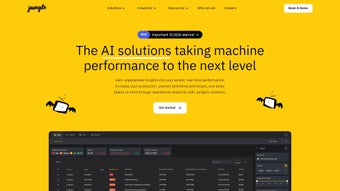
The unified dashboard presents performance trends, anomaly scores, and maintenance recommendations in a clear, collaborative environment that shortens mean‑time‑to‑repair (MTTR) and supports a proactive, data‑driven maintenance culture. In practice, organizations that adopt Jungle AI report measurable ROI through higher equipment uptime, lower maintenance spend, and a more resilient operation that can withstand unexpected disturbances while maintaining compliance with industry standards such as ISO‑27001 and GDPR. In short, Jungle AI empowers enterprises to shift from reactive break‑fix approaches to strategic asset stewardship, delivering measurable benefits across reliability, safety, and profitability.
Key Features of Jungle AI
Jungle AI packs a robust set of capabilities designed to address the most common pain points in industrial asset management. The platform’s architecture is built around modular, extensible services that can be tailored to specific operational contexts while retaining a consistent user experience across devices. Below is a detailed look at the core features that differentiate Jungle AI from traditional CMMS or SCADA add‑ons.
- Predictive Analytics Engine – Combines time‑series forecasting, anomaly detection, and classification models to predict equipment failures up to 30 days in advance, with confidence scores that help prioritize interventions.
- Canopy Module – Provides real‑time anomaly detection, root‑cause clustering, and automated work‑order creation. Users can define custom rule sets and threshold policies that trigger alerts directly into existing CMMS systems.
- Toucan Visualization Suite – Offers interactive dashboards, heat‑maps, and drill‑down charts that can be filtered by asset hierarchy, location, or risk level. Role‑based views ensure that operators see only the data they need.
- Dynamic Contextual Alarms – Reduces alarm fatigue by prioritizing alerts based on risk score, operational context, and historical response patterns. Alarms can be routed to email, Slack, SMS, or integrated with third‑party incident‑response platforms.
- Data Integration Flexibility – Native connectors for SCADA, OPC‑UA, MQTT, REST APIs, as well as simple CSV uploads, allow seamless ingestion of both high‑frequency sensor data and legacy batch files.
- Collaborative Workspace – Built‑in commenting, issue tagging, and task assignment enable cross‑functional teams to discuss anomalies, attach documentation, and track resolution progress within the platform.
- Mobile‑Responsive Design – The UI adapts to desktops, tablets, and smartphones, ensuring that field technicians can receive alerts and view dashboards on the go without sacrificing functionality.
- Secure Cloud Architecture – End‑to‑end encryption (TLS 1.3 in transit, AES‑256 at rest), role‑based access control, and compliance with ISO‑27001, GDPR, and industry‑specific standards such as NERC‑CIP for energy utilities.
- Automatic Updates – New AI models, security patches, and UI enhancements are pushed automatically, eliminating downtime associated with manual upgrades.
- Scalable Licensing – Tiered pricing based on the number of assets, users, and data volume allows organizations to start small and expand as ROI is demonstrated.
Installation, Usage & Compatibility
Installing Jungle AI is intentionally simple because the platform lives entirely in the browser. The following step‑by‑step guide walks you through account creation, data source configuration, and first‑time usage, ensuring that you can start monitoring assets in under an hour. Detailed screenshots and video tutorials are also available within the Help Center for users who prefer visual guidance.
- Create an Account – Visit the official Jungle AI website, click “Sign Up,” and provide a corporate email address. After receiving the verification link, activate the account and set a strong password following the on‑screen password policy.
- Configure Data Sources – Navigate to the “Integrations” tab and select the appropriate connector (e.g., SCADA, OPC‑UA, MQTT). Input connection details such as endpoint URL, authentication tokens, and data schema mapping. Jungle AI validates the feed in real time and displays a preview of incoming data.
- Define Asset Hierarchy – Import a CSV file that lists each piece of equipment, its location, criticality level, and any custom tags. The platform automatically builds a hierarchical tree view, enabling rapid navigation from plant level down to individual components.
- Activate Modules – Turn on Canopy for predictive alerts and Toucan for visual analytics. Both modules can run concurrently or be staged based on pilot testing results.
- Set Alarm Thresholds – Use the “Alarms” page to configure risk thresholds, escalation paths, and notification channels (email, Slack, SMS). Dynamic contextual alarms can be fine‑tuned to reduce noise while ensuring critical events are never missed.
- Invite Team Members – Assign roles (Administrator, Analyst, Operator) and invite users via email. Role‑based permissions guarantee that each stakeholder sees only the data relevant to their responsibilities.
- Start Monitoring – Once data streams are live, Jungle AI begins training its models on historical and real‑time data. Initial insights appear within 15‑30 minutes, after which the system continuously refines predictions as more data is collected.
Supported Operating Systems: Jungle AI is platform‑agnostic because it runs on modern browsers (Chrome, Edge, Firefox, Safari). It works equally well on Windows 10/11, macOS 12+, major Linux distributions, as well as mobile operating systems like Android 10+ and iOS 14+. No client‑side installation is required, making it ideal for distributed teams that operate across different hardware ecosystems.
Pros, Cons, FAQ & Conclusion
Pros
- Zero‑hardware deployment – leverages existing sensor data and IT infrastructure.
- High‑accuracy predictions thanks to continuous model training and built‑in validation.
- Intuitive UI reduces learning curve for non‑technical staff and accelerates adoption.
- Robust security and compliance features meet enterprise‑grade standards.
- Scalable pricing model fits both small plants and large multinational enterprises.
Cons
- Requires reliable internet connectivity for cloud access and model updates.
- Initial model training may need several weeks of historical data for optimal accuracy.
- Advanced customization (e.g., bespoke ML pipelines) is limited to premium subscription tiers.
Frequently Asked Questions
Is Jungle AI compatible with legacy equipment that lacks modern sensors?
Yes. Jungle AI can ingest data from CSV exports, manual entry logs, or low‑frequency batch files, allowing older assets to be incorporated into the predictive framework without costly retrofits.
How does Jungle AI handle data privacy and regulatory compliance?
All data is encrypted in transit (TLS 1.3) and at rest (AES‑256). The platform complies with ISO‑27001, GDPR, and industry‑specific standards such as NERC‑CIP for energy utilities, providing audit logs and role‑based access controls.
Can I export predictive insights for use in other systems?
Yes. Jungle AI offers RESTful endpoints and scheduled CSV/Excel exports, enabling seamless integration with ERP, CMMS, or custom BI dashboards.
What level of technical expertise is required to configure the AI models?
The platform provides out‑of‑the‑box models that require no data‑science background. Advanced users can fine‑tune parameters via a simple UI, but the default settings are optimized for most industries.
Is there a free trial or freemium version available?
Jungle AI offers a 14‑day free trial with full access to both Canopy and Toucan modules. After the trial, you can select from tiered subscription plans based on assets, users, and data volume.
Conclusion & Call to Action
Jungle AI stands out as a comprehensive, cloud‑native solution that brings the power of predictive analytics to sectors where equipment downtime translates directly into lost revenue. Its blend of sophisticated AI, user‑friendly visualizations, and flexible integration options makes it a practical choice for organizations looking to modernize maintenance without the overhead of new hardware installations. While a stable internet connection and a modest amount of historical data are prerequisites, the benefits—reduced unplanned outages, lower maintenance costs, and improved operational transparency—far outweigh the initial setup effort. If you’re ready to move from a reactive “fix‑when‑broken” mindset to a proactive, data‑driven maintenance strategy, Jungle AI offers a secure, scalable pathway. Click the button below to start your free trial, explore the Canopy and Toucan modules, and experience firsthand how AI can keep your machines humming longer.
Jungle AI delivers a robust set of predictive tools that are both easy to adopt and powerful enough for large‑scale deployments. The intuitive dashboards and contextual alarm system dramatically cut down on noise, while the underlying machine‑learning models provide reliable failure forecasts. The only notable drawbacks are the reliance on continuous internet connectivity and the learning curve associated with fine‑tuning advanced settings. Overall, for industries where uptime is mission‑critical, Jungle AI is a worthwhile investment.